

The landscape of sustainability claims is changing rapidly. New regulations in the EU and around the world make it more important than ever for brands and retailers to communicate sustainability information accurately and compliantly—and that includes Good On You’s ratings.
This article explains how retailers, platforms, and brands that partner with Good On You can use our ratings, Mark (ie the official Good On You Mark based on the Good On You logo), and/or data. Note that only brands with a current Good ("4") or Great ("5") rating may be used to communicate a sustainability claim, in any of the ways covered in this Guide.
Good On You compliance with EmpCo
Good On You has taken action to be compliant with new EU regulations that apply to environmental claims and use of sustainability labels from September 2026 (the Unfair Commercial Practices Directive 2005/29/EC, as amended by the Directive on Empowering Consumers for the Green Transition 2024/825). In particular, Good On You is now a compliant sustainability label with independent monitoring.
General guidelines for using Good On You brand ratings
Each use of a Good On You rating as a specific sustainability claim (including environmental claims as defined by EU law) needs to be clearly explained to the consumer.
For consumers to find products from highly rated brands, they first need to understand what the Good On You rating means in ways that do not mislead and are compliant with sustainability claims regulation. You achieve that by communicating precisely and specifically.
The good news is that Good On You can make it easy for you to comply with emerging legislation and provide the information that growing numbers of consumers are looking for.
But to do this, there are some rules you’ll need to follow. In particular, retailers and platforms should ensure they do the following:
Use a precise categorisation or filter that allows the consumer to discover products from brands rated by Good On You
Give clear definitions of what the categorisation and the Good On You rating mean
Make clear that it refers to the overall performance of the brand, not the product
Make it easy for consumers to find more detailed information where required, within one click
Not deviate from any textual or visual communications made by Good On You
Keep every rating you display current by integrating with our Ratings API, or by promptly making manual updates
Avoid claims that go beyond what our ratings support, including implying an absolute standard of sustainability performance
The following sections show you how to do this in practice, with examples relevant to the work of sustainability teams, product designers, and marketers. The guidance directly addresses online communications, and while similar issues may arise in physical retail settings and on-product claims, this is not a complete guide to those cases.
This guidance is for retailers, platforms, and brands that partner with Good On You covering use of our ratings, Mark and/or data.
Disclaimer
The suggestions in the following sections are based on legal advice provided to Good On You. We offer these as suggestions as to how you may consider using Good On You ratings to empower customers/users of your platform to confidently choose products from more sustainable brands. You should obtain your own legal advice based on decisions you make about how you choose to use the data and communicate with consumers on your platform and in your marketing.
Specific use cases for retailers and e-commerce platforms
If you plan to launch new features like a shopping category or filter to help consumers find products from brands that are rated highly by Good On You, then you’ll want to review the following examples to see what best practice looks like. And if you already use Good On You brand ratings in these ways, we’ve provided further guidance highlighting where you might need to tweak your terminology or update visual assets—the examples illustrate how a hypothetical e-commerce platform might approach this in a compliant way.
1. You can use ratings for shopping filters and categories
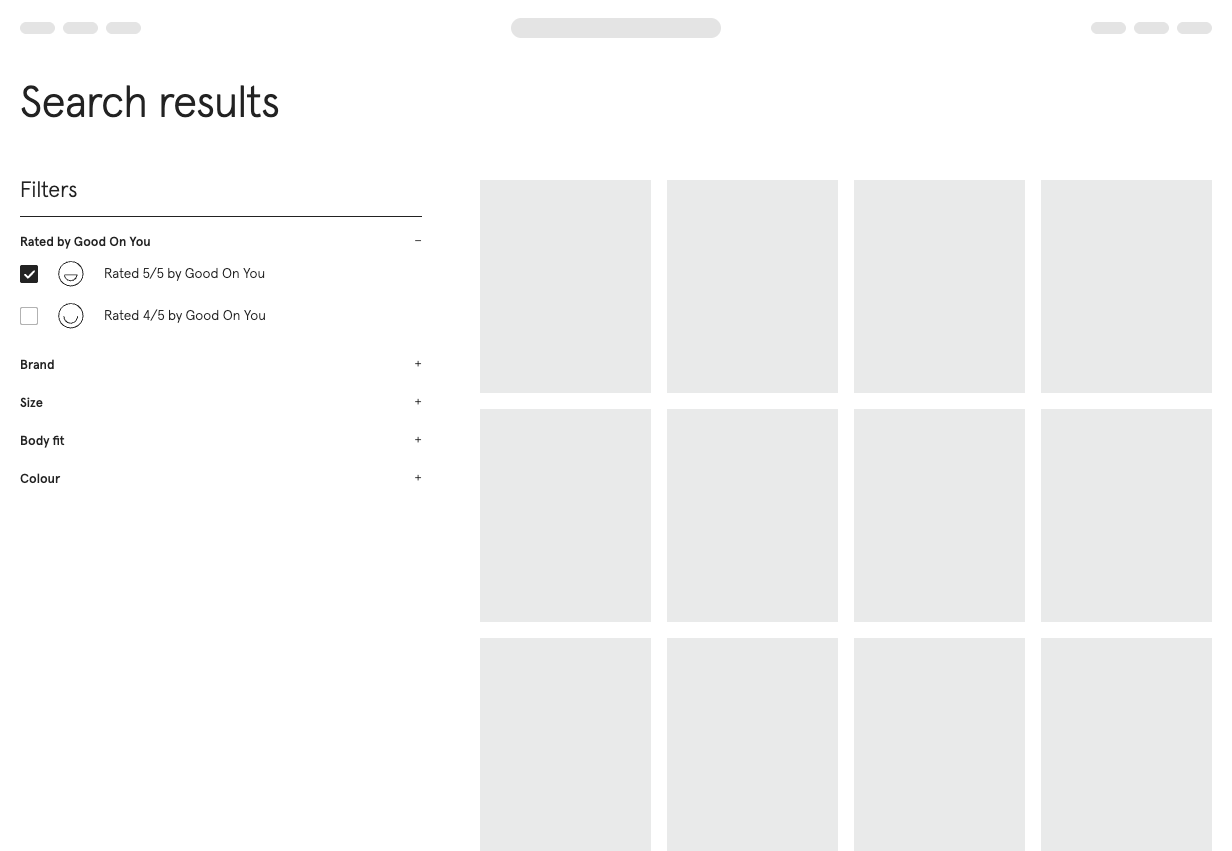
Figure 1: Good On You brand ratings are a consumer-friendly way to create shopping filters and categories, though you need to ensure your wording is not misleading.
Having a shopping filter or category helps consumers find brands and products that better match their values in order to make more informed choices. The filter itself is considered a sustainability claim and so it must not be misleading. Regulators will likely scrutinise absolute sustainability claims, such as labelling a brand or product as "sustainable" or "conscious", especially if these claims cannot be adequately supported, so they are best avoided. Finding alternatives can be challenging as filter labels often need to be concise for technical reasons.
Here are some key points on navigating this challenge:
Be precise with the filter terminology
Be clear about the kinds of products/brands included within the filter so customers can understand exactly what each filter means
Ensure the claim can be substantiated
A filter featuring brands rated highly by Good On You can provide the precision, clarity, and substantiation required to make sustainability claims. If you consider further evidence, certifications, and indicators in your criteria for what brands and products appear in your filter in addition to Good On You’s ratings, that will likely require you to consider different terminology that would stand up to regulatory scrutiny.
The following is a list of terms that could be considered for a filter using Good On You ratings, based on our understanding of the regulatory landscape. These examples assume the filters lead solely to products from brands rated highly by Good On You.
Specific filter terms using Good On You
These terms clearly show the characteristics of the products included in this filter, and their relation to Good On You ratings.
[Brand] Rated 5/5 by Good On You
Rated 4/5 by Good On You
Rated by Good On You
Rated high by Good On You
Rated Good On You
Good On You preferred
Good On You ratings / rated
Less specific filter terms
Options that do not name Good On You within the term itself may be considered but are less precise and will be deemed unacceptable generic claims (under EU law) unless their link to Good On You ratings is clearly and prominently explained in the same medium, ie on the same page and ideally next to the filter (or via persistent pop-up). See more details below.
The following terms do not reference the link to Good On You, but the reference to "ratings" is helpful: it signals to the consumer that a specific assessment sits behind the term, rather than an unsupported claim about the brand itself.
Sustainability ratings
Ethical ratings
Ethical brand rating
High-rated brand
Unlike the terms above, none of the following carries any signal on their own that a specific assessment sits behind them, whether the word is a common adjective or one you've coined yourselves (ie a bespoke retailer label), so further explanation is required.
More ethical
More sustainable
More conscious
[bespoke retailer label] brand
In each case here, it is necessary to prominently, in the same medium, state what the term means. For example: “‘More sustainable’ shows products from brands rated Good or Great by Good On You”, or “‘[bespoke retailer label]’ shows products from brands rated Good or Great by Good On You”. This also supplies the basis for the comparison that "more" implies, since it makes clear the comparison is against the Good On You rating scale, not some unstated wider claim.
In every case, this means the explanation needs to sit adjacent to the filter control or category label, not merely elsewhere on the page or behind a link.
2. You can use Good On You’s assets as visual aids
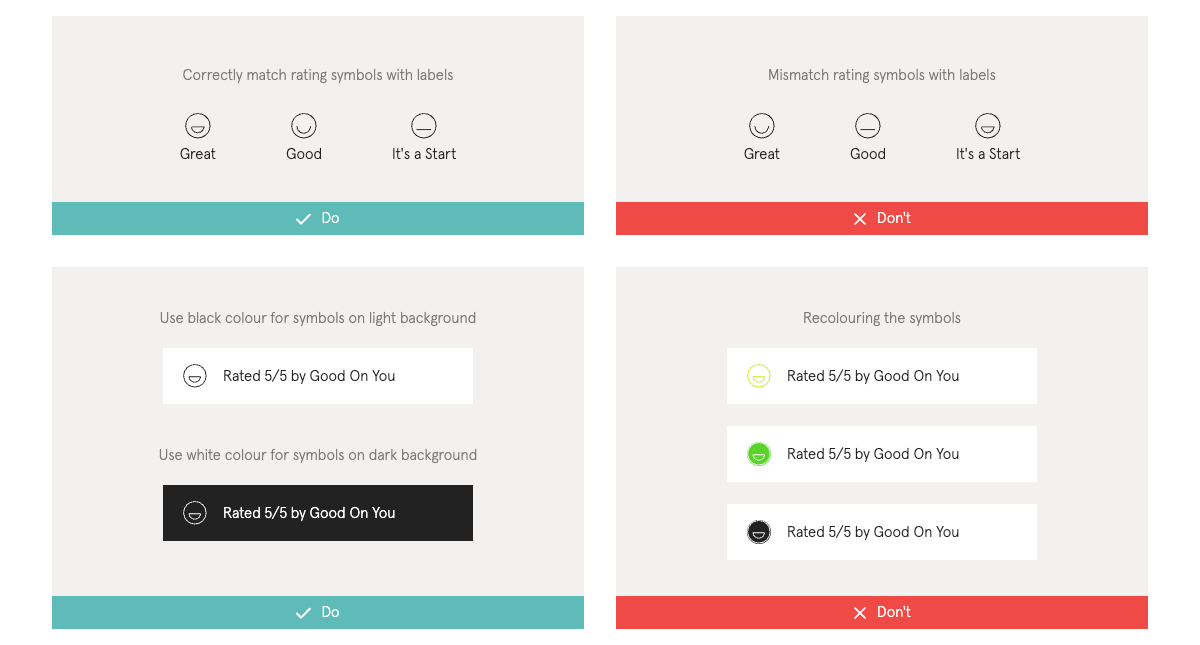
Figure 2: Good On You’s smiley icons can help you communicate ratings in an accessible way to consumers, and our enterprise customers are free to use them consistent with our guidance.
Good On You ratings visual assets can be used to support the filter terms outlined above. But you must not misrepresent the Good On You ratings. Check out the dos and don’ts, illustrated in figure 2, and follow these quick tips:
You must use the five-point ratings, labels, and symbols strictly with the same words and meaning as we do
You can use people, planet, and animal rating categories to support the overall brand ratings. However, selecting just one or two of the three categories, in other words, omitting part of the explanation, could be considered misleading
Be careful not to position the rating symbol next to the product without clarity that it relates to the brand (find some advice below on explaining that to consumers)
Avoid recolouring assets, especially using the colour green
Use of the Good On You Mark
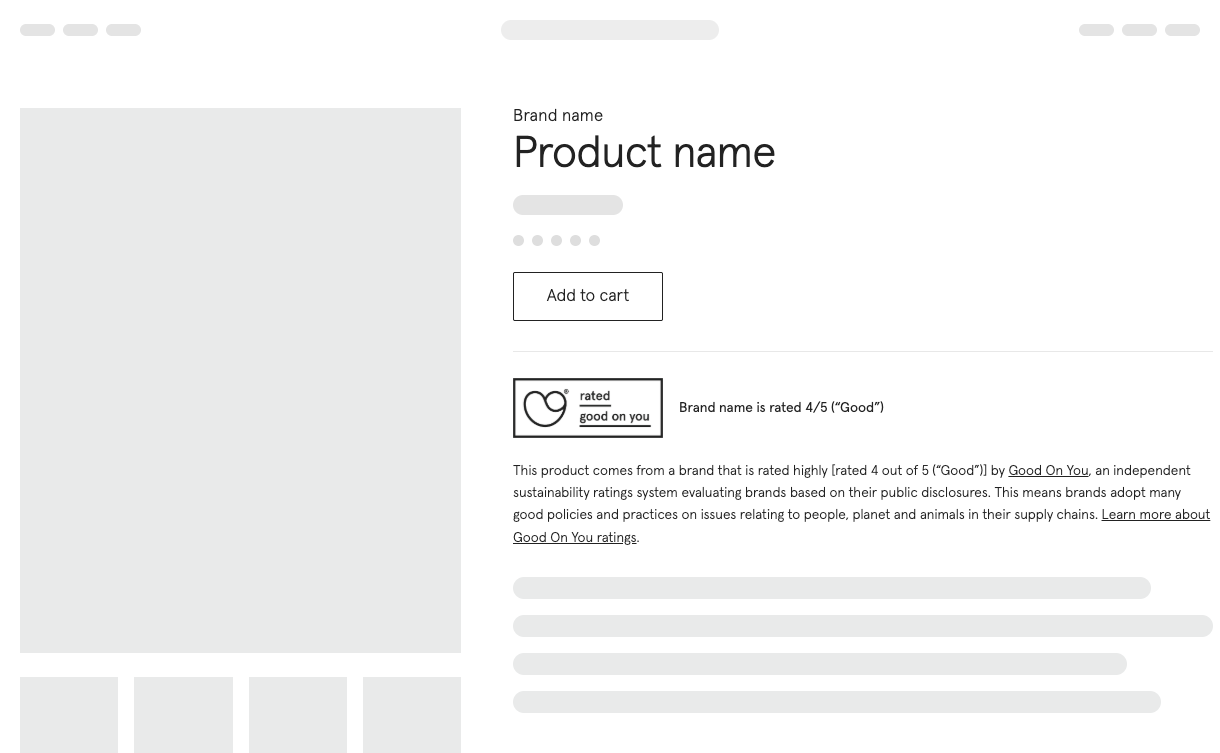
Figure 3: Good On You's Mark can be used to communicate current brand ratings, but its placement and use must not be misleading.
Partners with permission to use Good On You ratings may use the Good On You Mark to:
Communicate the current Good On You rating of brands you stock on your website, in-store, and in marketing and other communications
Promote a brand or its products in your range
Reference ratings in press, PR, and other public communications
In doing so, please ensure you:
Use the Mark exactly as supplied, without altering, recolouring, distorting, or partially displaying it
Make clear that the Mark applies to the relevant brand as a whole, not to a specific product
Use the Mark strictly with the same wording and meaning we apply
Ensure any filter, category, or search terms you use to surface the Mark are precise and not misleading
3. You’ll need to explain what Good On You ratings mean
Whichever approach is used to create a shopping filter or category using Good On You ratings, retailers should include clear expanations of what the categorisation means for the consumer. For this not to be considered misleading, the consumer needs to access up-to-date information, so links must be maintained and functioning at all times. We provide solutions to make that easier in the sections below.
4. You should explain it on search results pages
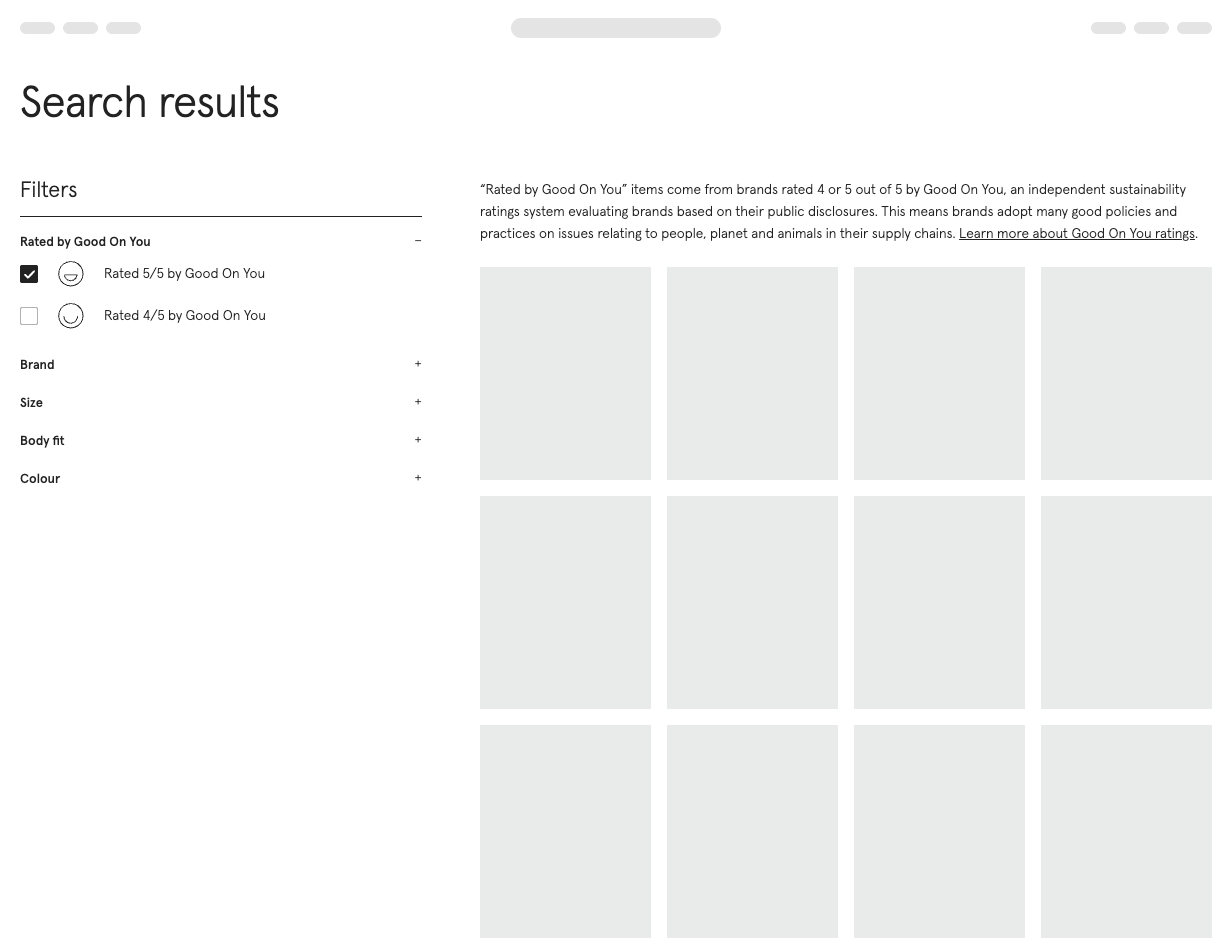
Figure 4: Consumers need to be able to clearly understand what Good On You ratings mean when they’re used for a search filter or category—for example, on a hypothetical search results page.
This should include a summary of what a Good On You rating means on any page where the claim appears, such as the search results page and/or product page (see example text below). Where needed, the definitions on these pages (or popups) should include links to more detailed information, at most only one click away. As noted above, it needs to be clear to consumers that Good On You ratings are brand-level, not product-level. Any rating, Mark, or filter shown on a category, search, or product page must clearly communicate that it reflects the brand’s overall performance.
Example text that could appear on relevant search results or category pages:
“‘Rated by Good On You’ items come from brands rated 4 or 5 out of 5 by Good On You, an independent sustainability ratings system evaluating brands based on public evidence. This means brands adopt many good policies and practices on issues relating to people, planet, and animals in their supply chains. Learn more about Good On You ratings [Link]."
5. You should explain it on product pages, too
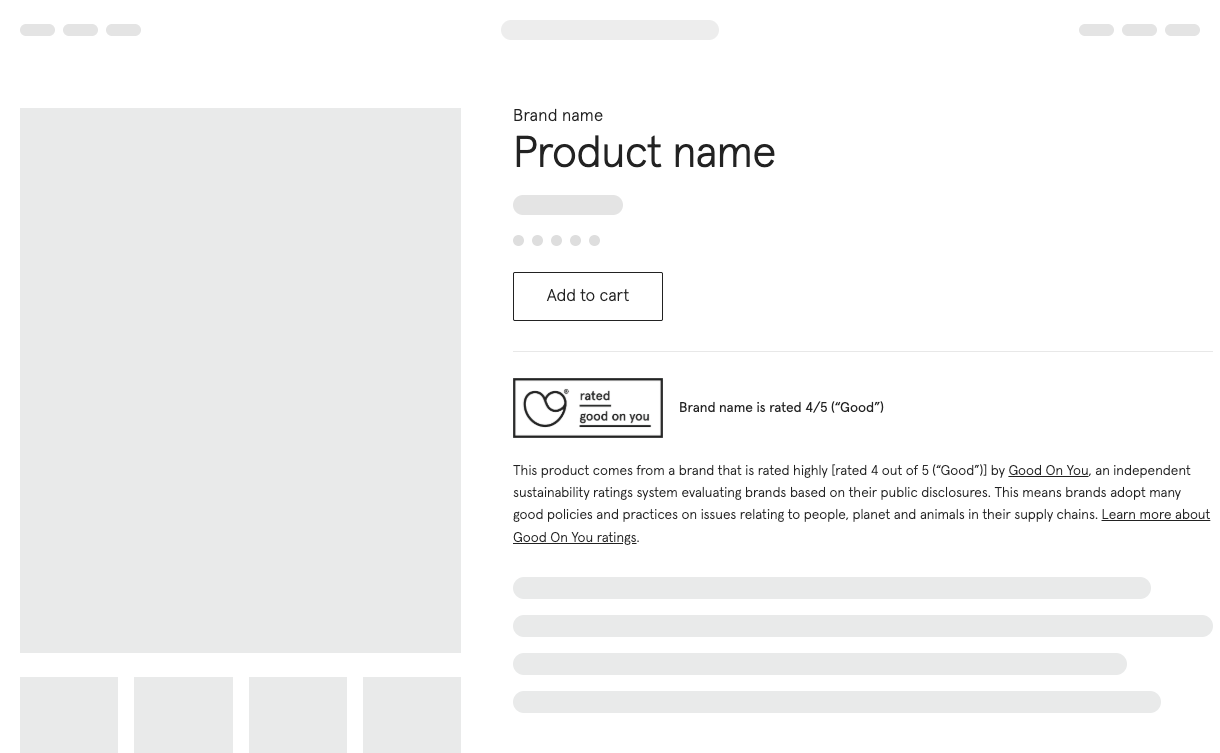
Figure 5: When consumers click through to a product page, they should be able to quickly identify an explainer section.
Product pages should also provide consumers with a detailed explanation of what the Good On You rating and filter/category mean, with links to more information close to the definition itself. It should be clear that the rating applies to the brand, not the product.
Example text that could appear on a product page:
“This product comes from a brand that is rated highly [rated 4 out of 5 (‘Good’)] by Good On You, an independent sustainability ratings system evaluating brands based on public evidence. This means brands adopt many good policies and practices on issues relating to people, planet and animals in their supply chains. Learn more about Good On You ratings [Link].”
6. You can dive deeper into our ratings on a helpful page with more details
While information should always be clearly visible and accessible on search result pages and product pages, it’s also important to give consumers an opportunity to dive deeper. This is best practice in terms of transparency and a requirement of EU law from September 2026. It can also help retailers and platforms build trust by demonstrating how you’ve partnered with an independent, trusted source consumers can rely on for up-to-date information on how the brands they’re considering are rated by Good On You.
Example text that could appear on a page with more details:
“[Retailer] is committed to giving consumers accurate sustainability information they can trust, backed by Good On You brand ratings.
About our ['Rated by Good On You'] filter
‘Rated by Good On You’ items come from brands rated 4 or 5 out of 5 by Good On You, an independent sustainability ratings platform based on public evidence. This means brands adopt many good policies and practices to manage people, planet, and animal issues across their supply chain. Good On You provides an overall rating on a five-point scale—from 1 (‘We Avoid’) to 5 (‘Great’)—so consumers can have the full picture on the impact of their choices. Learn more about Good On You ratings [Link].”
[Add detailed description of each brand rating label, using the up-to-date descriptions from Good On You’s rating guides.]
7. You can use Good On You’s existing resources to inform consumers
When it comes to talking about and using Good On You ratings, your best bet is to link out to our hub page for rating explainer content, which is already written and formatted to make it easy and accessible for consumers to read. You can link to this URL: https://goodonyou.eco/how-we-rate
This page is updated regularly to reflect changes in our methodology (such as the issues we cover or the sources of information considered in brand ratings). Our team of editors and content experts also creates explainer and thought leadership content using our ratings data, which often addresses specific issues considered in our methodology. You can link out to this content at any point throughout your consumer journey to help educate and inform consumers.
Good On You’s enterprise customers have the opportunity to use information from our ratings explainer content—such as copy found on the page URL provided above—on your own webpage. In these cases, it’s important that someone on your team is responsible for ensuring that information is up to date and accurate.
8. You can plug into Good On You’s API to keep everything up to date
As explained above, it’s crucial that consumers are able to access relevant and up-to-date information about what the sustainability criteria displayed on your website really mean. For this information to not be considered misleading, the consumer needs to be able to access up-to-date information at all times, so links must be maintained and functioning at all times.
That’s where Good On You’s API can do a lot of the work for you. Once you’ve set it up and running, Good On You’s enterprise customers can ensure all of their information is up to date at all times—including essential tasks like keeping brand ratings updated but also supporting you with consumer engagement content.
For example, through the API, you can surface URLs for every brand rating page on the Good On You directory (e.g. https://directory.goodonyou.eco/[brand name]). This makes it a cinch to quickly give consumers a way to identify the exact brand rating on the Good On You dashboard and go deeper into how Good On You rated the brand. Our recommended way to do this is to provide a prominent call-to-action on product pages that links users to the corresponding brand rating on Good On You’s directory. This, as regulations require, gives timely and up-to-date information about the brand rating, and it also instils confidence in consumers that you’ve partnered with a trusted, independent source for this information.
For more information on our API, refer to the Good On You Developer Guide.
Data usage terms
As outlined in our standard agreement terms, partners may use Good On You ratings and data to:
Provide information about the ethical and sustainability performance of brands included in the data to users of your website, app and/or other digital communication channels
Inform its choices in respect of partnering with and/or marketing certain brands or merchants; and
Identify brands to invite to use Good Measures
In doing so, please ensure you:
Do not modify, alter, or adapt the ratings data in any way
Do not disclose the data to any third party without our prior written consent
Maintain the security of all usernames and passwords supplied by Good On You
Please refer to the terms and your Data Services Agreement for more detailed conditions of use.
Use of the Good On You Mark by rated brands
Where your brand holds a current Good ("4") or Great ("5") Good On You rating, you may, with our agreement, use the Good On You Mark as a compliant sustainability label and reference your rating to:
Communicate your rating to consumers on your website, packaging, marketing, and other communications
Use phrases such as 'Rated "Good" by Good On You' to promote your brand or products
Reference your rating in press, PR, and other public communications
In doing so, please ensure you:
Use the Mark exactly as supplied, without altering, recolouring, distorting, or partially displaying it
Make clear that the rating and Mark applies to your brand as a whole, and does not imply that it relates to a specific product—particularly where it appears on product pages, packaging, or other product-adjacent content
Keep your use current: update or remove the rating, claim, or Mark without undue delay if your rating changes, and cease use immediately if it lapses or is suspended
Avoid claims that go beyond what the rating and Mark support, including implying an absolute standard of sustainability performance
Best practice is also to include a short description of what “Rated Good On You” means (similar to section 4 above) and/or a link from the label to more details on our ratings (ie https://goodonyou.eco/how-we-rate).
For example:
“‘Rated Good On You’ is awarded to brands rated 4 or 5 out of 5 by Good On You, an independent sustainability ratings system based on public evidence. This means the brand adopts many good policies and practices on issues relating to people, planet, and animals in its supply chain. Learn more about Good On You ratings [link].”