

You can use Good Measures to share updates on your sustainability policies and practices and to submit evidence for review by Good On You.
1. Review your rating and make updates
Start by selecting “Update Rating” in the main navigation menu, where you’ll see your existing Good On You rating, which is divided into three pillars: people, the planet, and animals. You’ll also see your brand’s current score at the top and scores within each pillar (all out of 100).
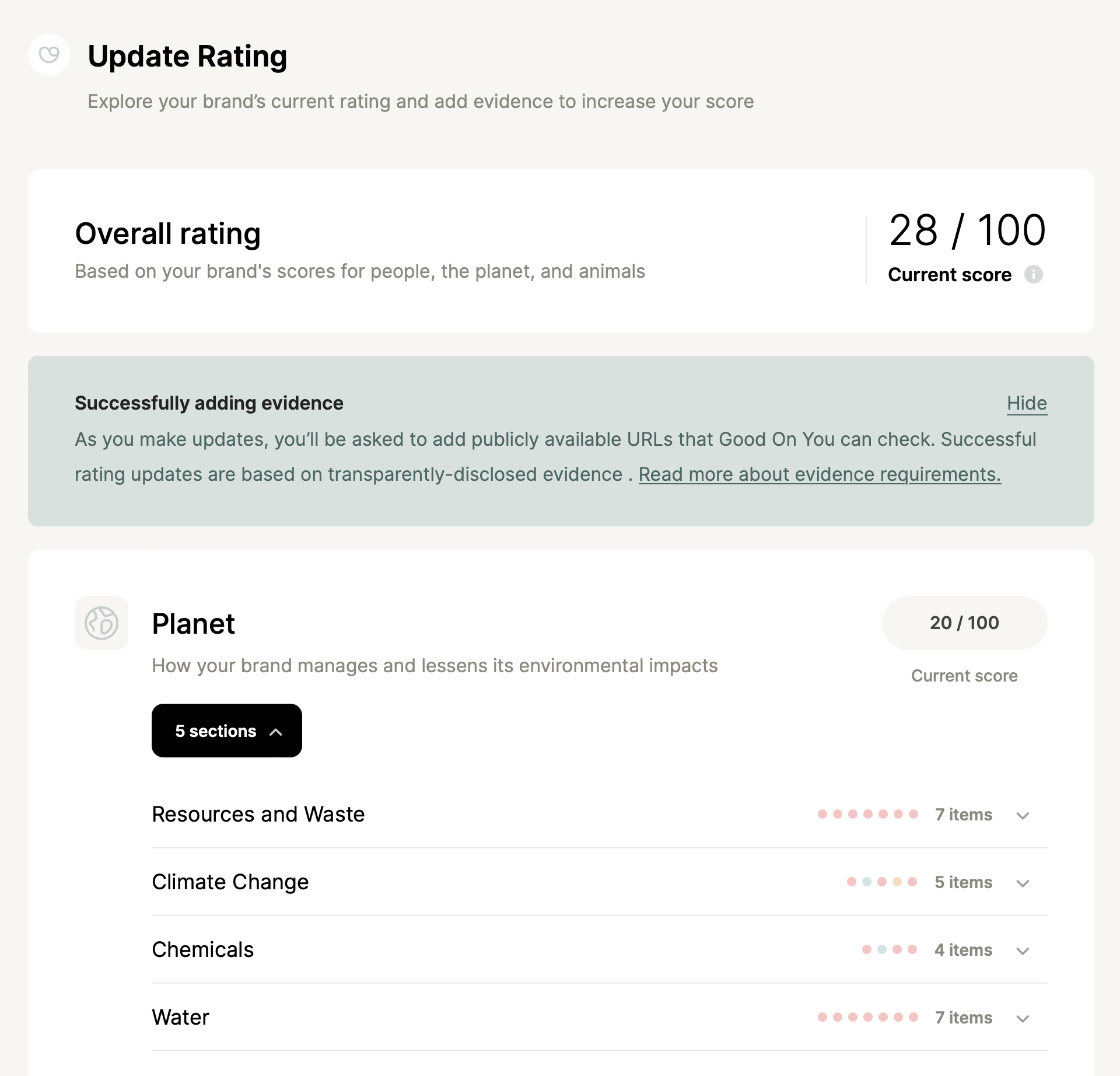
Open the themed sections within each pillar to view how your brand is rated across the issues. Click an issue and you’ll see some questions include pre-filled information, which is based on your existing Good On You rating. This is where you make updates. Carefully check the pre-filled information and ensure it’s correct. (Note that not all information from your existing rating will be pre-filled—learn more here.) For each question you answer, you’ll need to add evidence, which you can do as you go or save and return to add it later. Learn more about evidence requirements.
You’ll make updates one issue at a time. You can do so in any order that you like. You can also save your work and come back to it later.
2. Get suggestions for where to improve
Good Measures gives you tips on where to focus, based on your brand’s current rating. Select “Suggestions” in the main navigation menu.
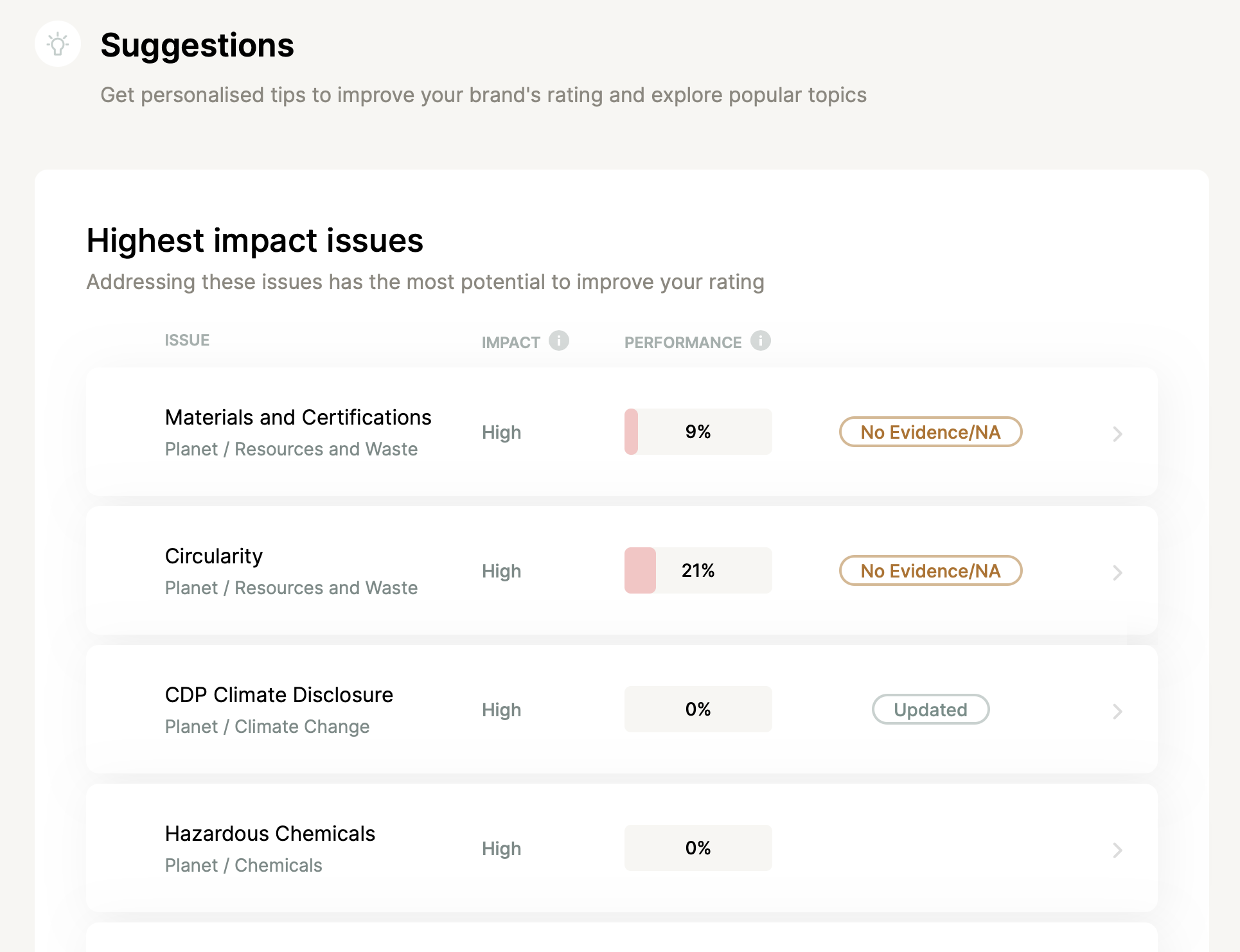
Here you’ll get tips on what areas to focus on to improve your score and sustainability practices. “Highest impact issues” gives you a series of issues where your brand has the greatest potential to improve its rating, based on the scoring system and current performance. You’ll also see “Common topics”, where you can dive into popular topics and all the issues related to those topics.
3. Submit updates for review by Good On You
Once you're completed making updates, select “Submit Updates” in the main navigation. Here you’ll see the status of issues to review before submitting.
All - All issues will appear here with their status. A submission always includes all data in across issues, not just those you've updated. So you need to make sure all of the data is as complete as is possible as all of it will be reviewed and contribute to your final rating.
Not reviewed - Issues that have not been saved in the side panel saved. You will need to review and save the issue to confirm the data is accurate. That may include data that was imported from your previous rating.
Incomplete - Issues that were saved but have required questions that do not have answers.
Missing evidence - Issues that were saved with complete answers but at least one required question does not have evidence.
Reviewed - Issue has been saved and all required questions have answers and evidence
The more comprehensive information you can provide will give you your best chance to provide clarity to Good On You analysts in the review process, even if that means answering that you are taking limited or no action on certain initiatives. So the best strategy is to submit a complete data set with all issues under the "Reviewed" status.
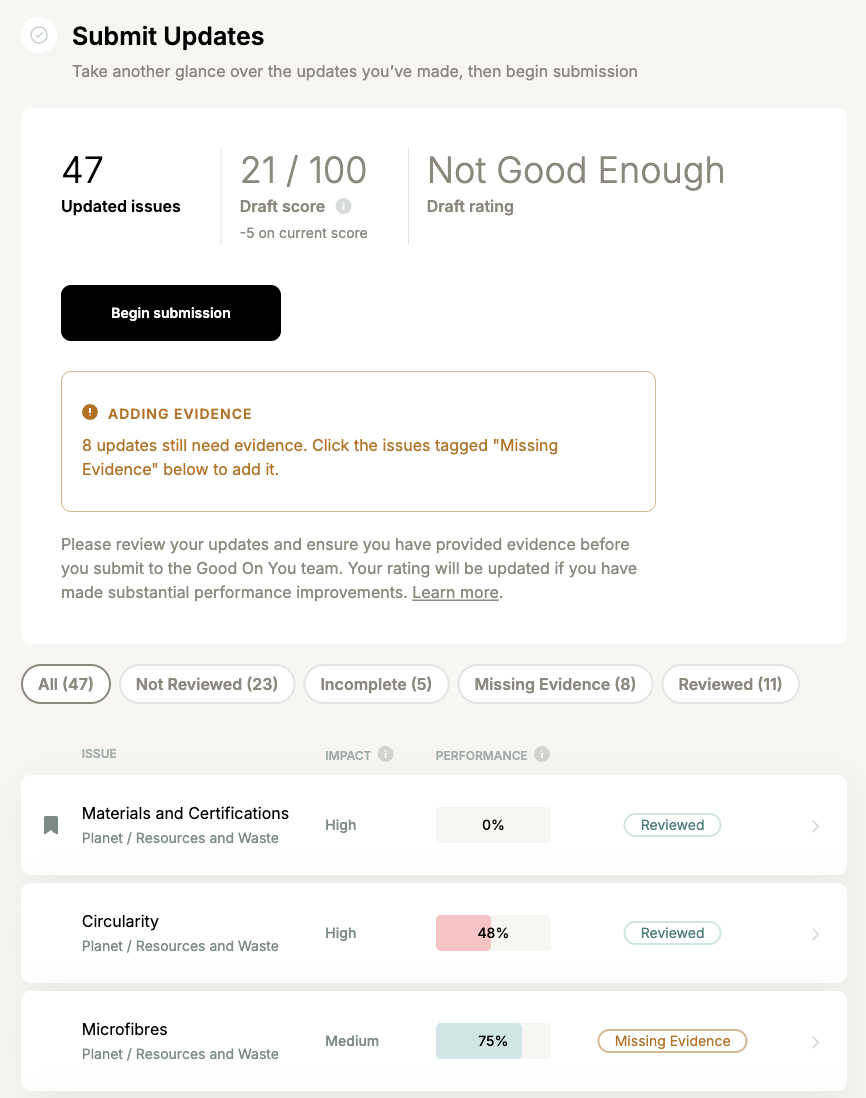
After checking over your updates and ensuring your evidence is added, click “Begin submission” where you’ll complete the submission process and submit your updates to Good On You.
Once you’ve submitted your updates to Good On You, you will not be able to make any further updates until your rating review is complete. Rating reviews typically take 2-6 weeks to complete.
You’ll receive an email when the review is complete, with feedback on your updates, and your new rating will be published.